Recurring tasks
Some work comes back. The rent goes out on the first of the month, the invoices run every second Friday, and a filter wants changing twice a year. A recurring task is one task that knows its own rhythm, so you write it once and it keeps showing up.
Setting one up
Open a task, click its due date, and pick Set recurring at the bottom of the date picker. You pick a pattern, either daily, weekly, monthly, yearly or a custom interval like every 14 days, and the sentence under the panel spells out what you've chosen, so you can read it back before you leave.
Monthly has two shapes worth knowing apart. The 15th of every month keeps the date. The third Thursday of every month keeps the weekday, which is what most meetings actually mean.
Ticking it off is what makes the next one
The next occurrence appears when you mark the current one done. Nothing turns up in the background because a date went past.
Never finish it, and you have one overdue task. That's true, and it's useful. The alternative fills your list with twelve identical rows nobody asked for, and buries the fact that nobody has done the job since March.
The next date is counted from the due date
Hand August's invoices in on 2 September, and the next deadline is still the next one in the pattern. The date you actually ticked it off doesn't move the rhythm, or a monthly routine would walk slowly down the calendar, arriving a little later every time.
Days after done is the deliberate exception. Pick it when the gap matters more than the date: water the plants four days after you last watered them, not on the 1st and the 15th whatever happened in between.
Missed ones are skipped
Ignore a daily task for three weeks and finishing it gives you one new task, dated for the next occurrence still ahead of you. It doesn't hand you the twenty-one you missed. The point of the series is what comes next.
Month ends hold their ground
"The 31st of every month" is 30 April, never 1 May. February gets the 28th, or the 29th when the year allows it. The task stays inside the month it belongs to.
Ending the series
Under Ends you can leave it running forever, stop it after a count you choose, or stop it on a date. Choose After 4 times and the fourth one is the last: tick that one off and nothing follows it. The task stays where it is, finished, like any other.
To stop a repetition early, open the date picker and choose Stop repeating this task. The task itself stays where it is and stops making new ones.
Seeing what is coming
Recurring tasks can show their future occurrences in Calendar as dashed outlines. The switch is in the recurrence panel, per task, so a daily routine doesn't have to fill your month. A repeating task carries a small loop glyph on its chip, so you can tell one from an ordinary task at a glance.
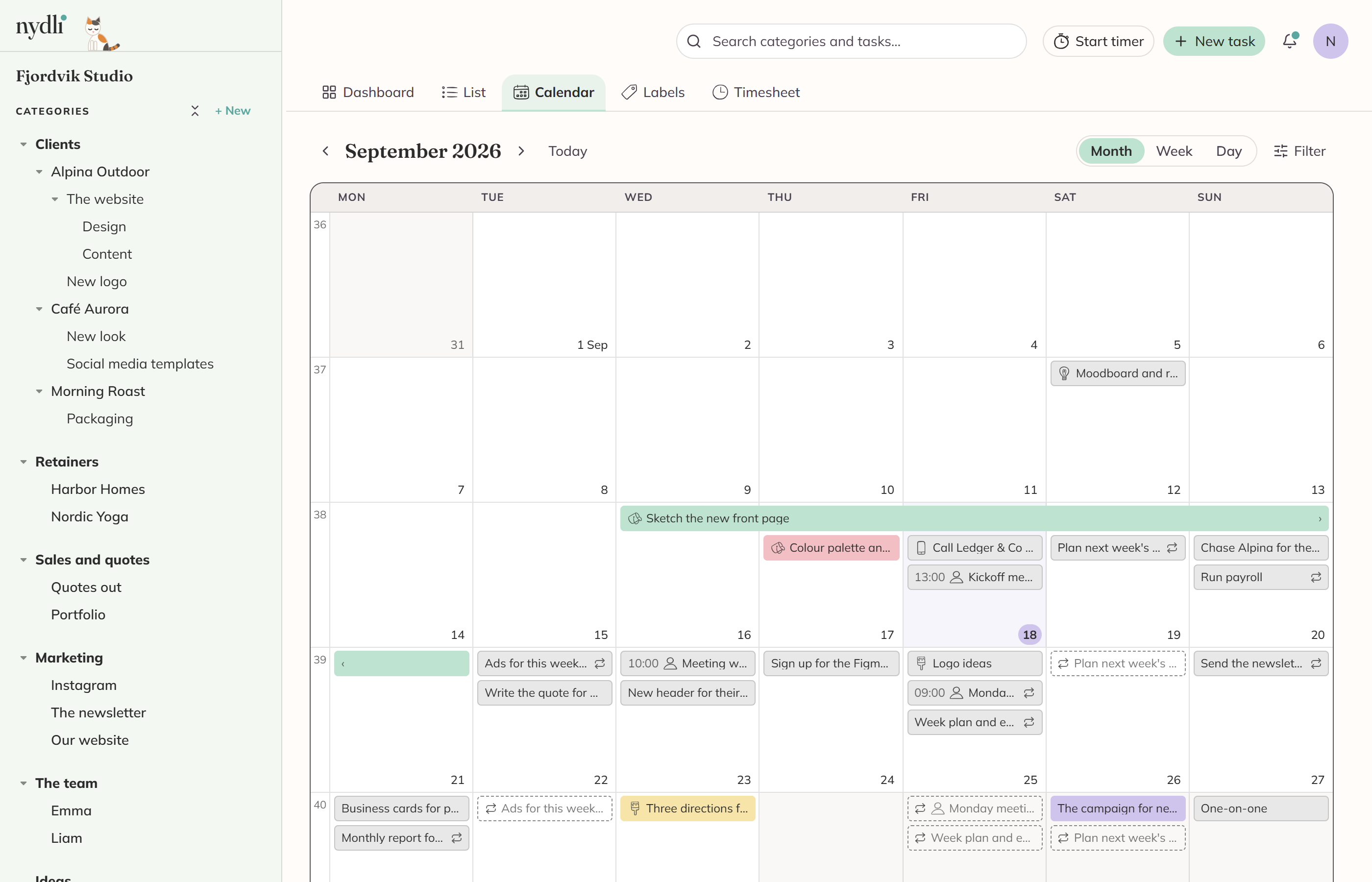
An outline is a drawing, not a task. Nydli works it out from the pattern each time it paints the view and stores it nowhere, so it counts in no total and leaves no mark on your timesheet. You can't drag it, tick it off or hand it to anybody, because there's nothing there yet to do that to. Clicking one opens the real task the pattern belongs to.