Calendar
The Calendar shows the same tasks as List, laid out by date. A task appears here once it has a start date, a due date, or both. A task with no dates isn't late, it just isn't scheduled, so it stays out of the way.
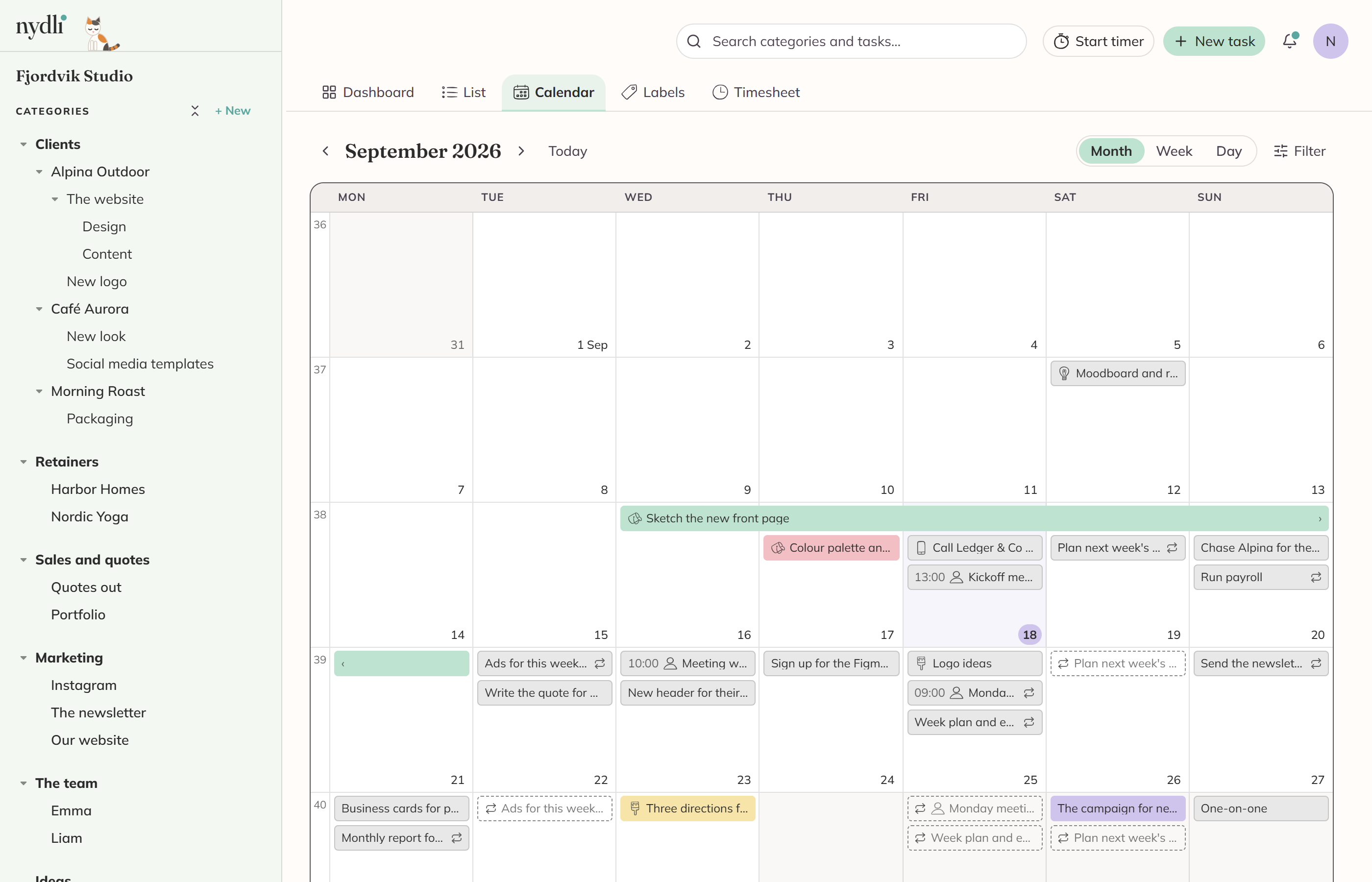
Month, week and day
Switch with the buttons at the top right. The arrows step one period at a time and Today jumps back to now.
The period label, "September 2026", is itself a button. It opens a year stepper and a grid of twelve months, so getting to next April is two clicks rather than seven presses of the arrow.
Weeks start on the day you chose in Settings, and the week number runs down the left edge in month and week view.
What a task looks like
- A task with both dates draws as a bar from the start to the due date, across as many days as it needs.
- A task with one date is a single-day chip.
- A time of day shows on the bar: the start time on the day it begins, and the end time on the day it ends.
Each chip has a tick in front of it to mark the task done on the spot, and a menu on the right for renaming, favouriting, starting the timer, moving it to another category, duplicating it, clearing the dates, archiving and deleting. Clicking the chip itself opens the task.
Week and day
Week and day view split the screen: an All day band across the top for the tasks with no time of day on them, and a clock below it for the ones that have. The band shows three tasks per day before it offers to open up.
When a day is full
A month cell holds four tasks. Beyond that it shows +3 more, which takes you to that week, where there's room. The month stays readable at a glance, and the week view is one click away.
The calendar is allowed to be taller than the screen. Scrolling a month is better than squeezing six weeks into a window and making every task unreadable.
Adding a task on a date
Hover a day and click the + that appears, or click a half hour in the week or day clock. A small panel opens beside it with a name, a category and the day you clicked. Enter saves and closes, Escape or a click outside discards, and Add details creates the task and opens it in the full editor, so the name you've already typed comes with you.
Filtering
Filter works exactly as it does in List. You can filter by label, by favourites, by assignee or by tasks with no due date, and Show done tasks brings the finished ones back. Switching between List and Calendar keeps your filter, so you can look at the same slice of work either way.